
Teeth Grinding at Night: Signs, Risks and What Helps
You wake up with a tight jaw, a dull headache, or teeth that feel a little sore, and you cannot quite work out why. Maybe your partner has mentioned a grinding sound coming from your side of the bed, or maybe you have no idea anything is happening at all. Nighttime teeth grinding, known as sleep bruxism, is very common, and many people do it without realizing. It is often manageable once you know what to look for.
This guide looks at why grinding happens, what it can do to your teeth if it goes unaddressed, and the habits that can help alongside a night guard.
What Is Teeth Grinding at Night and Why Does It Happen?
Bruxism is the habit of clenching or grinding your teeth. When it happens during sleep, it is called sleep bruxism. Because you are unconscious, most people only find out when someone else hears it or a dentist spots the wear.
There is no single cause. Several things may play a part:
· Stress and anxiety: many people clench or grind more during tense periods.
· Sleep patterns: grinding is often linked to lighter stages of sleep and brief awakenings.
· Sleep related breathing issues: some people who grind also snore, which is worth raising with a doctor.
· Bite and jaw alignment: the way your teeth fit together may contribute for some people.
· Caffeine, alcohol and tobacco: these can be associated with more grinding in some people.
· Certain medications: some may be linked to clenching or grinding.
· Genetics: bruxism sometimes runs in families.
Grinding is not a character flaw, and you are not doing it on purpose. There are practical ways to protect your teeth.
Signs You May Be Grinding Your Teeth
Since you are asleep, the clues usually show up the next day. Common ones include a sore or tired jaw in the morning, dull headaches near the temples, teeth that are suddenly sensitive, and teeth that look flatter, shorter or chipped. Some people notice a clicking jaw, indentations along the edge of the tongue, or a rough line inside the cheek. A partner may also hear the noise, and you may feel less rested even after a full night.
One sign alone does not prove you grind, because several have other causes. Sensitivity, for example, can come from erosion or gum recession, which we cover in why teeth become sensitive. If more than one sounds familiar, mention it at your next visit. A dental exam lets us look for wear patterns you cannot see yourself.
What Happens If You Ignore Teeth Grinding?
Not every case leads to problems, and some people grind lightly with few effects. Over time, though, ongoing grinding can add up:
· Worn enamel: repeated grinding thins the protective outer layer, which can make teeth sensitive.
· Cracked or chipped teeth: extra force can cause small fractures or break down existing work. A cracked tooth that reaches the nerve may need a root canal, and a sudden break is a reason to call us for emergency care.
· Damaged restorations: grinding can loosen or wear down fillings and crowns, so they may need to be repaired or replaced sooner than expected.
· Loose or sore teeth: heavy grinding can strain the tissue that supports your teeth.
· Jaw pain: the jaw joints and muscles may become sore, tight or irritated.
· Headaches and facial tension: tight jaw muscles may contribute to headaches.
None of this is meant to alarm you. Many of these problems can be avoided or reduced with early attention.
When a Night Guard Helps
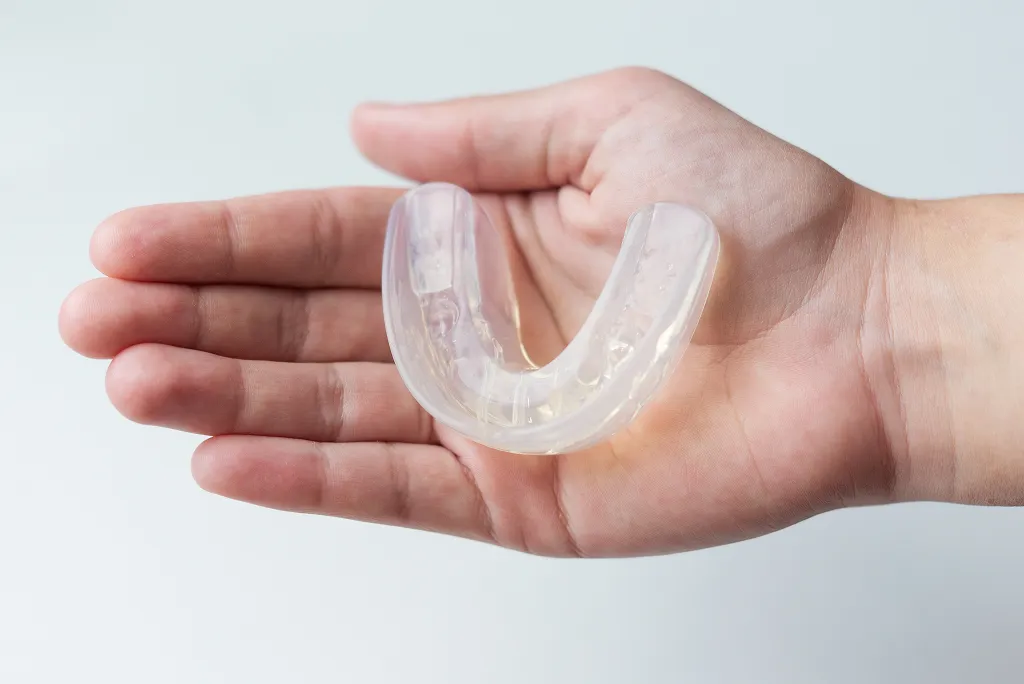
A night guard is a custom appliance worn over your teeth while you sleep. It makes a cushion between your upper and lower teeth, so the force of grinding is spread out instead of wearing your enamel. It does not always stop the grinding itself. What it can do is protect your teeth from wear, chipping and cracking, and ease strain on the jaw for some people.
We make night guards from a digital scan or an impression of your teeth, so the fit is made for your mouth. Store bought guards come in a few sizes and can feel bulky or shift during the night, and a guard you will not wear does not protect anything. How long a guard lasts depends on how hard you grind, and we check it at your regular visits.
What Else Can Help With Nighttime Grinding?
A guard is usually one piece of the plan. Depending on what is behind your grinding, other steps may help:
· Stress management: relaxation techniques, regular exercise or a calming bedtime routine help some people.
· Cutting back on caffeine and alcohol in the evening, since both can interfere with sleep.
· Keeping a steady sleep schedule and a comfortable sleep space.
· Gentle jaw stretches, if your dentist or a physical therapist recommends them.
· Talking to a doctor if you snore or feel very tired, in case a sleep evaluation is useful.
· Reviewing your bite with us, since in some cases bite adjustments or other dental treatment may be worth discussing.
Regular visits are also how we catch wear early. Our preventive care program includes exams that let us track changes over time.
Ask About Teeth Grinding at Beekman Dental Care
If you suspect you are grinding at night, you do not have to figure it out alone. Dr. Neha Dave and our team can examine your teeth, explain what we see, and tell you whether a night guard makes sense for you. We will answer your questions in plain language and help you understand your next steps. We welcome patients from Sleepy Hollow, Tarrytown, Irvington, Ossining and White Plains. Contact Beekman Dental Care or call (914) 631-0999 to schedule a visit.
FAQs
Q. How do I know if I grind my teeth at night?
Clues include a sore jaw in the morning, headaches, worn or chipped teeth, and sensitivity. A partner may also hear grinding. A dentist can look for wear during an exam.
Q. Does a night guard stop teeth grinding?
A night guard is designed to protect your teeth and reduce strain on the jaw, but it may not stop the grinding itself. We may suggest other strategies alongside it.
Q. Are over the counter night guards okay to use?
They can offer some cushioning, but the fit may be loose or bulky. A custom guard is made for your mouth, which usually makes it more comfortable to wear every night.
Q. How long does a night guard last?
It depends on how hard you grind. Some people go years with the same guard, while heavy grinders may need a replacement sooner. We check it at your regular visits.
Q. Will teeth grinding go away on its own?
For some people it improves, especially when stress eases, while for others it continues. Regular checkups help us monitor for wear and decide on the best approach.
Connect with Us
We make your dental care experience smooth and accessible.


Monday: 10:00 AM - 6:00 PM
Tuesday: 10:00 AM - 6:00 PM
Wednesday: Closed
Thursday: 10:00 AM - 6:00 PM
Friday: 10:00 AM - 6:00 PM
Saturday: 10:00 AM - 3:00 PM (Alternating)
Sunday: Closed




© 2026 Beekman Dental Care | All Rights Reserved | Privacy Policy | Digital Marketing by Remedo