Plaque vs Tartar: Why Brushing Cannot Remove Tartar
You brush twice a day, you floss most days, and yet your hygienist still finds buildup near the gumline. It is a common frustration, and it usually comes down to one thing. Plaque and tartar are not the same, and only one of them can be cleaned away at home.
The short answer: plaque is the soft, sticky film you can brush off. Tartar is plaque that has hardened, and once it has, only a professional cleaning removes it.
What Is Plaque?
Plaque is a thin, sticky film of bacteria that coats your teeth. It starts building again within hours of brushing, especially after you eat or drink something with sugar or starch. You can often feel it as a fuzzy layer on your teeth when you wake up.
Left alone, the bacteria in plaque produce acids that wear on enamel. That is how cavities start. The same bacteria irritate the gums, which can lead to redness, swelling and bleeding when you brush or floss.
The good news is that plaque is soft. Thorough brushing and daily flossing remove most of it before it causes trouble.
What Is Tartar?
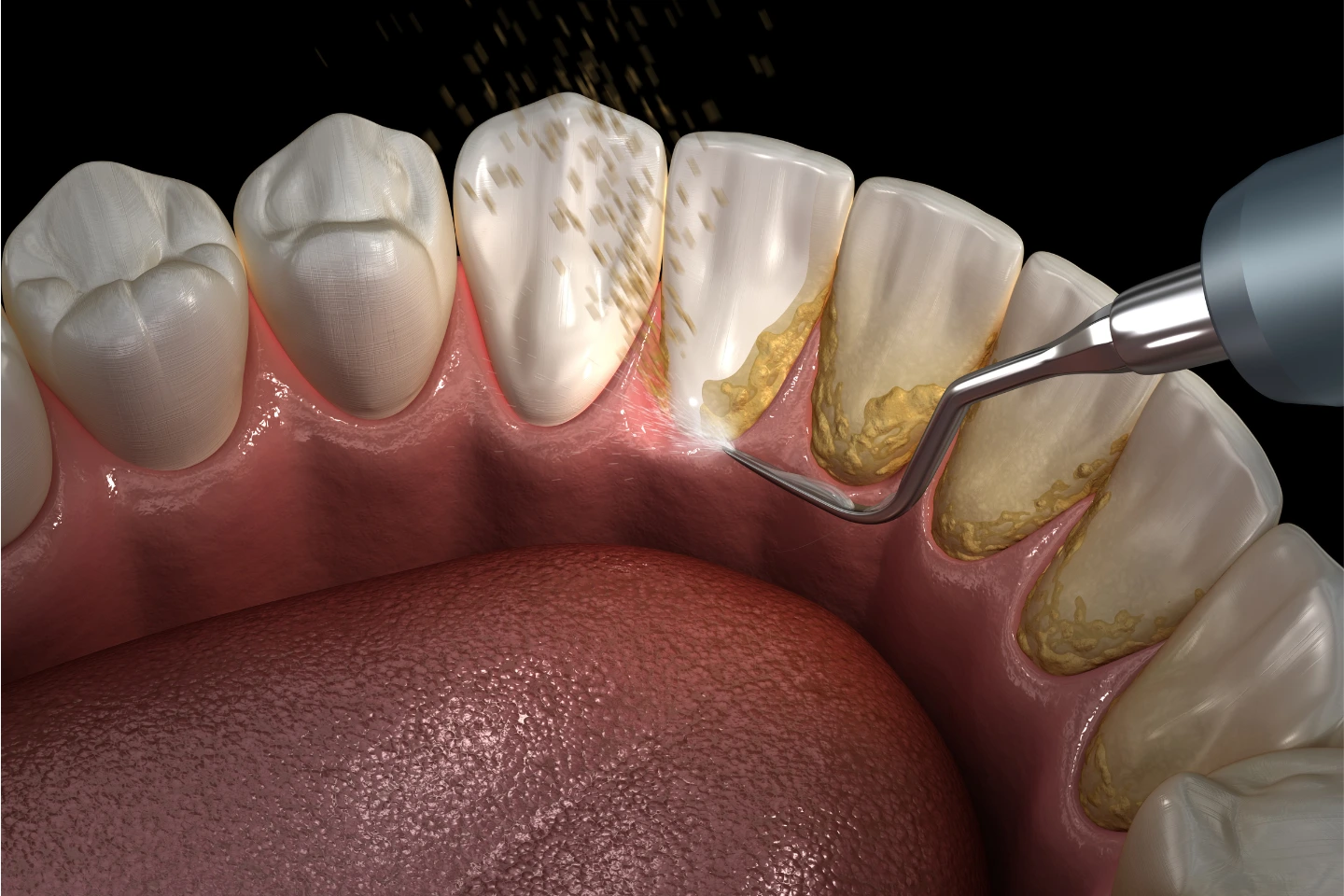
Tartar, also called calculus, is plaque that has hardened onto the tooth. Minerals in your saliva harden the film, and once that happens it bonds firmly to the enamel. It collects most along the gumline and in the tight spaces between teeth, and often shows up on the backs of the lower front teeth near the tongue.
Tartar is rough and porous, which gives fresh plaque an even better surface to cling to. It can also look yellow or brown, so it stains easily.
You cannot brush or floss tartar off. Scraping at it with a fingernail or a sharp tool at home can scratch enamel and injure your gums, so please leave it to us.
Plaque vs Tartar at a Glance
· What it is: plaque is a soft, sticky bacterial film. Tartar is hardened plaque.
· How it looks and feels: plaque is clear to pale and feels fuzzy. Tartar is yellow or brown and feels rough and hard.
· How fast it forms: plaque builds up within hours. Tartar can form within a day or two if plaque is left in place.
· How it is removed: plaque comes off with brushing and flossing. Tartar needs professional scaling at a dental visit.
· Why it matters: plaque leads to cavities and gum irritation. Tartar keeps irritating the gums and makes new plaque harder to remove.
Why It Matters for Your Gums
When tartar sits at or below the gumline, your gums stay inflamed. Early gum disease, called gingivitis, is often reversible with a good cleaning and better home care. Ignored, it can progress to deeper infection that affects the tissue and bone holding your teeth in place.
That is why we pay close attention to the gumline at every visit. If tartar has gone below the gumline and the gums have started to pull away from the teeth, a standard cleaning may not be enough. In those cases we may recommend periodontal treatment, which cleans below the gumline to help your gums heal.
Tartar also affects how your smile looks. Stained buildup near the gumline is one of the reasons teeth look dull even when you brush well. After a cleaning, some people choose teeth whitening to brighten what is left.
How to Keep Plaque From Turning Into Tartar
You cannot stop plaque from forming, but you can remove it before it hardens.
· Brush twice a day for two minutes with fluoride toothpaste and a soft brush, angling the bristles toward the gumline. Brush your tongue too.
· Floss once a day. Flossing reaches between teeth, which is where brushing misses and where tartar loves to start.
· Rinse with water after meals when you cannot brush, and limit sugary drinks and snacks that feed plaque bacteria.
· Ask us whether a fluoride treatment makes sense for you if you are prone to cavities.
· Stop using tobacco, which is linked to heavier buildup and gum problems.
· If you have trouble reaching certain areas, ask us about tools such as interdental brushes or a water flosser.
Some people build tartar faster than others, even with good habits. Saliva makeup, crowded teeth and dry mouth all play a part, so a clean mouth at home does not rule out a visit.
What Happens at a Professional Cleaning
At a dental cleaning, we check your teeth and gums for plaque and tartar, remove the hardened tartar, polish your teeth to smooth the surface, and floss. We also talk through your home care so you leave with tips that fit your mouth. Your visit also includes an oral exam, so we can catch cavities and gum changes early.
Most patients do well with a visit about every six months. If you have a history of gum problems, we may suggest coming in more often. Our preventive care program brings exams, cleanings and gum checks together, and you can read more in why preventive dental care matters for lifelong oral health.
Book Your Cleaning in Sleepy Hollow
If it has been a while since your last cleaning, or your gums bleed when you brush, now is a good time to come in. Dr. Neha Dave and our team will remove the buildup and show you how to keep it from coming back. Contact Beekman Dental Care or call (914) 631-0999 to schedule.
FAQs
Q. Can I remove tartar at home?
No. Tartar is hardened and bonded to the tooth, so brushing and flossing will not remove it. Scraping it yourself can damage enamel and gums. A professional cleaning is the safe way to remove it.
Q. How do I know if I have tartar?
You may see yellow or brown buildup near the gumline or behind the lower front teeth, or feel a rough texture with your tongue. Bleeding gums and persistent bad breath can also be clues. Small deposits are hard to see, so a dental exam is the best check.
Q. Does tartar cause bad breath?
It can. Tartar gives bacteria a rough surface to hold on to, and those bacteria produce odor. Removing the buildup and keeping up with brushing and flossing usually helps.
Q. Is plaque the same as cavities?
No. Plaque is the bacterial film that can lead to cavities by producing acid that wears down enamel. A cavity is the damage that results.
Q. Can whitening toothpaste remove tartar?
No. Whitening toothpaste may help with light surface stains, but it cannot dissolve hardened tartar. Only scaling at a dental visit removes it.
Connect with Us
We make your dental care experience smooth and accessible.


Monday: 10:00 AM - 6:00 PM
Tuesday: 10:00 AM - 6:00 PM
Wednesday: Closed
Thursday: 10:00 AM - 6:00 PM
Friday: 10:00 AM - 6:00 PM
Saturday: 10:00 AM - 3:00 PM (Alternating)
Sunday: Closed




© 2026 Beekman Dental Care | All Rights Reserved | Privacy Policy | Digital Marketing by Remedo